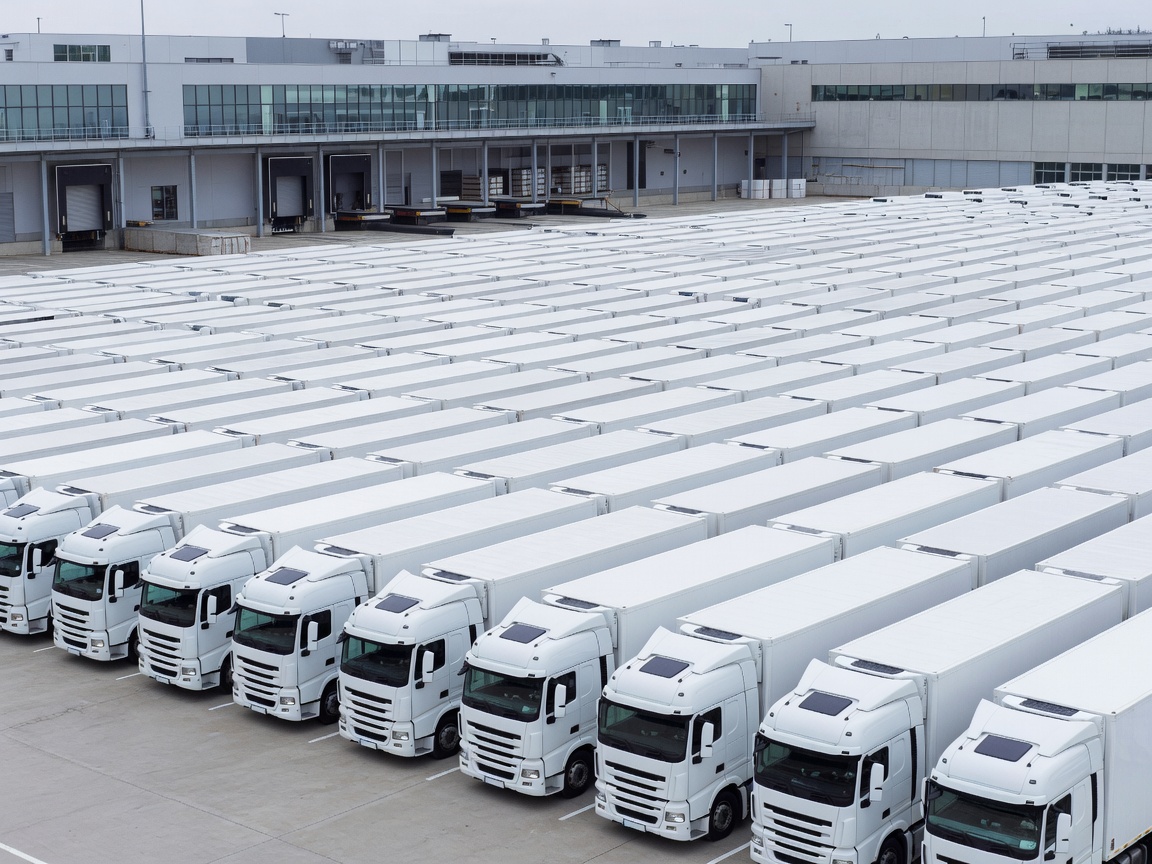
The Mechanics of Mobile Refrigeration
Moving temperature-sensitive seafood across European road networks requires specialized equipment. Refrigerated road transport (commonly referred to as reefers) utilizes insulated trailers equipped with independent cooling units. However, a common misconception in logistics is that transport refrigeration is designed to cool products down. It is not. Transport refrigeration is designed solely to maintain the temperature at which the product was loaded.
If a pallet of seafood is loaded at an ambient temperature and the vehicle is set to chilled, the cooling unit will struggle, consume excessive fuel, and likely fail to bring the core temperature of the pallet down in time to prevent degradation. Pre-cooling is therefore an absolute necessity. Both the product and the vehicle must be at the target temperature before the loading doors open.
Vehicle Preparation and Loading Patterns
Vehicle preparation involves more than just turning on the cooling unit. The trailer must be thoroughly cleaned and sanitized, as seafood environments are highly susceptible to cross-contamination and persistent odors. Once cleaned, the unit runs to achieve the required internal climate.
How the cargo is placed inside the trailer is just as critical as the temperature setting. Poor loading patterns destroy cold chains. Cold air must circulate evenly around the entire load to absorb heat penetrating through the trailer walls. If pallets are pushed tightly against the walls, or stacked too high against the ceiling, airflow is blocked. "Hot spots" develop in the restricted areas. Proper stowage requires leaving gaps for air channels and utilizing floor grooves specifically designed for circulation.
Managing Transit Realities
Executing a transport run involves managing external variables that constantly threaten the internal climate of the trailer.
- Door Openings: Every time the rear doors are opened for a multi-stop delivery, the refrigerated air escapes, and warm, humid ambient air rushes in. This causes condensation, which can freeze on the evaporator coils, reducing efficiency. Strip curtains and disciplined operational speed minimize this impact.
- Delivery Windows: Short-distance distribution often involves multiple stops, increasing thermal exposure. Longer European routes involve fewer door openings but carry higher risks regarding vehicle breakdowns and fuel management for the independent cooling unit.
- Handover Procedures: Arriving at a destination requires a coordinated handover. The receiver must be ready to move the pallets immediately from the truck into cold storage, often via sealed loading bays.
Comparing Transport Modalities
Chilled vs. Frozen Transport: Chilled shipments are extremely delicate, requiring constant air circulation to prevent freezing while maintaining cold. Frozen transport relies heavily on the solid block of cargo acting as a thermal mass; maintaining sub-zero ambient air is critical, but minor fluctuations are absorbed by the ice block more effectively than fresh products.
Short vs. Long Routes: A localized delivery route might utilize smaller, highly insulated vans utilizing gel packs or dry ice rather than mechanical refrigeration, depending on the duration. Trans-European freight entirely depends on robust mechanical reefers with dual-temperature zones capable of holding frozen and chilled goods simultaneously in partitioned sections.
Questions to ask a logistics provider
- What is the standard procedure for pre-cooling vehicles before loading?
- How is airflow maintained when carrying mixed or partial loads?
- What contingency plans exist if a refrigeration unit fails during transit?
- How do drivers document door openings and temperature fluctuations?