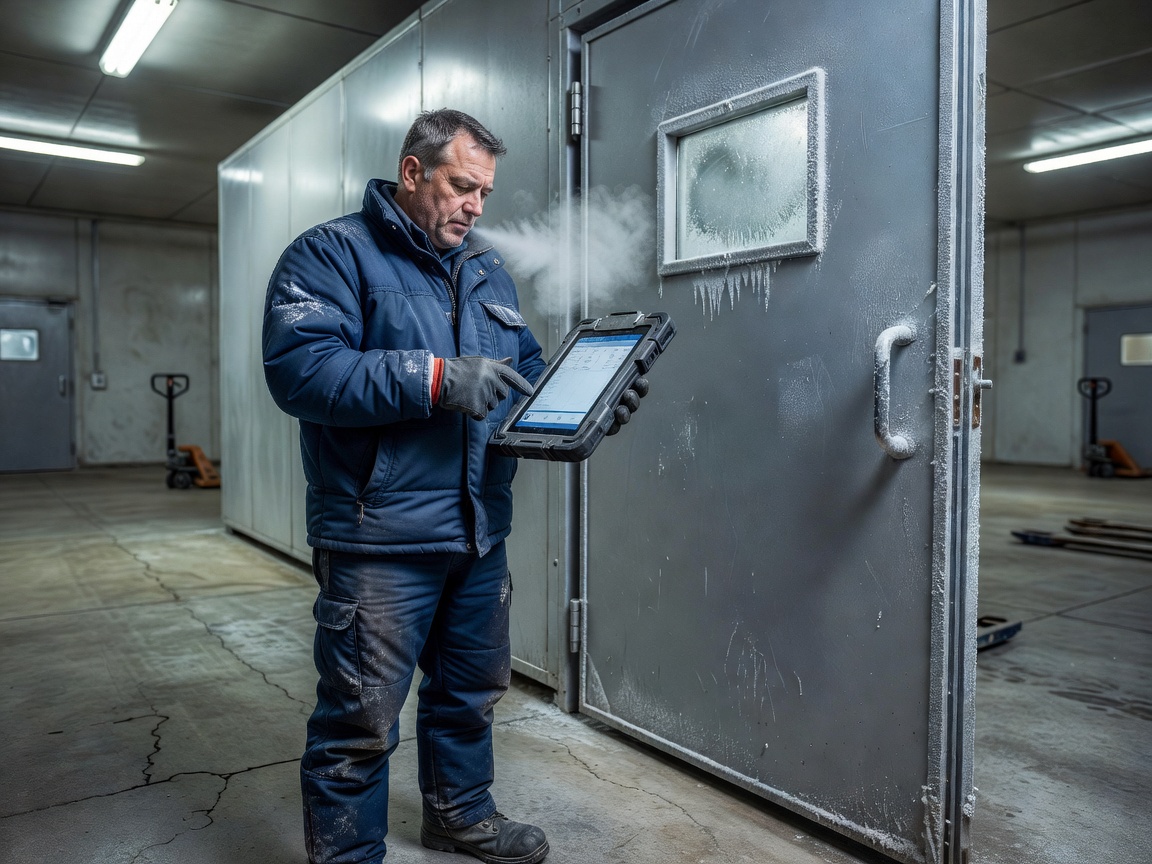
The Visibility Imperative
Trust is an abstract concept in logistics; verification is concrete. Cold-chain monitoring relies on capturing, interpreting, and responding to environmental data throughout a shipment's journey. Without rigorous temperature monitoring, a logistics provider cannot definitively prove that seafood remained safe and viable during transit.
Monitoring takes several forms, from simple visual indicators to sophisticated digital data loggers placed directly inside insulated packaging. These sensors capture the ambient temperature at specified intervals, creating a continuous historical record. If a pallet of chilled fish is exposed to warm air during a loading delay, the logger will record the spike, allowing quality control teams to assess potential degradation before the product reaches the consumer.
Monitoring vs. Recording vs. Alerting
It is crucial to understand the functional differences between various approaches:
- Recording: Basic data loggers collect temperature information to be downloaded and reviewed after the journey is complete. This provides historical proof but offers no ability to fix a problem during transit.
- Monitoring: Continuous observation of the environment, often done via the truck's refrigeration unit dashboard, ensuring the machinery is operating as requested.
- Alerting: Active systems that transmit data via cellular networks. If temperatures breach predefined thresholds, these systems generate immediate alerts to dispatchers or drivers, prompting intervention.
- Responding: The human or automated action taken when an alert is received, such as adjusting cooling settings, rerouting, or inspecting a trailer seal.
Documentation and Traceability Concepts
Traceability connects physical products to their digital data trails. Handover documentation is the backbone of this process. When seafood changes possession—from a warehouse to a transport provider, or from a truck to a final receiver—temperature readings are recorded on the shipment records. This establishes clear boundaries of liability and confirms adherence to handling protocols.
Exception handling is a critical part of data review. If a sensor records a brief temperature deviation (for example, during a routine door opening at a cross-docking facility), experts must interpret the data to determine if the product's core temperature was actually affected. Ambient air warms much faster than a dense box of iced seafood.
Data Review and Communication
Effective monitoring is useless without strong communication protocols. Drivers, warehouse managers, and quality assurance teams must understand how to read sensor data and what steps to follow if an exception occurs. Consistent monitoring intervals provide a clear picture, building confidence in the integrity of the European cold-chain network.
Monitoring Checklist
- Determine if real-time alerting or post-transit data logging is required.
- Establish the acceptable temperature range and set clear alert thresholds.
- Ensure sensors are properly calibrated and placed near the most vulnerable cargo.
- Create a clear procedure for exception handling and communication.
- Verify handover documentation captures precise temperature readings at transfer.