Defining the Seafood Cold Chain
The seafood cold chain is a specialized logistics sequence designed entirely around continuous temperature management. Unlike ambient freight, perishable marine products require strict environmental controls from the moment of harvest until final delivery. The cold chain is not a single piece of equipment, but rather an unbroken series of synchronized processes: rapid chilling, insulated packaging, refrigerated storage, controlled transport, and disciplined handling.
Why does temperature control matter so much for seafood? Biological degradation in marine products accelerates rapidly when temperatures fluctuate. Enzymes and bacteria natural to fish activate in warmer environments. By restricting thermal energy, the cold chain suppresses these processes, preserving structural integrity, texture, flavor, and operational viability.
Chilled versus Frozen Logistics
Logistics operators primarily divide seafood transport into two distinct operational categories: chilled and frozen.
Chilled Logistics: Operations focused on fresh seafood usually require temperatures just above the freezing point of the specific product. This is incredibly complex to manage because the tolerance for error is minuscule. If the temperature drops too low, the product suffers cellular damage from ice crystal formation. If it rises, deterioration accelerates. Chilled transport relies heavily on melting ice, gel packs, and highly active refrigeration units to maintain this delicate equilibrium.
Frozen Logistics: Deep-frozen supply chains focus on maintaining products at sub-zero temperatures (often significantly below standard freezing, depending on operator procedures and destination). While frozen chains have slightly more thermal inertia—meaning they warm up slower than chilled products—prolonged exposure during loading and unloading can still cause partial thawing and refreezing, leading to compromised textures known as freezer burn.
Handling Stages and Vulnerabilities
The greatest risks to cold-chain integrity rarely occur while a product is sitting in a warehouse or cruising down a highway inside a functioning reefer. Vulnerabilities exist at the transitions—the handling stages.
- Loading and Unloading: Moving products from a cold facility to a transport vehicle exposes them to ambient air. Loading bays must be sealed or climate-controlled where possible.
- Storage Transitions: Moving pallets between different temperature zones (e.g., from a deep freeze to a staging area) requires careful timing.
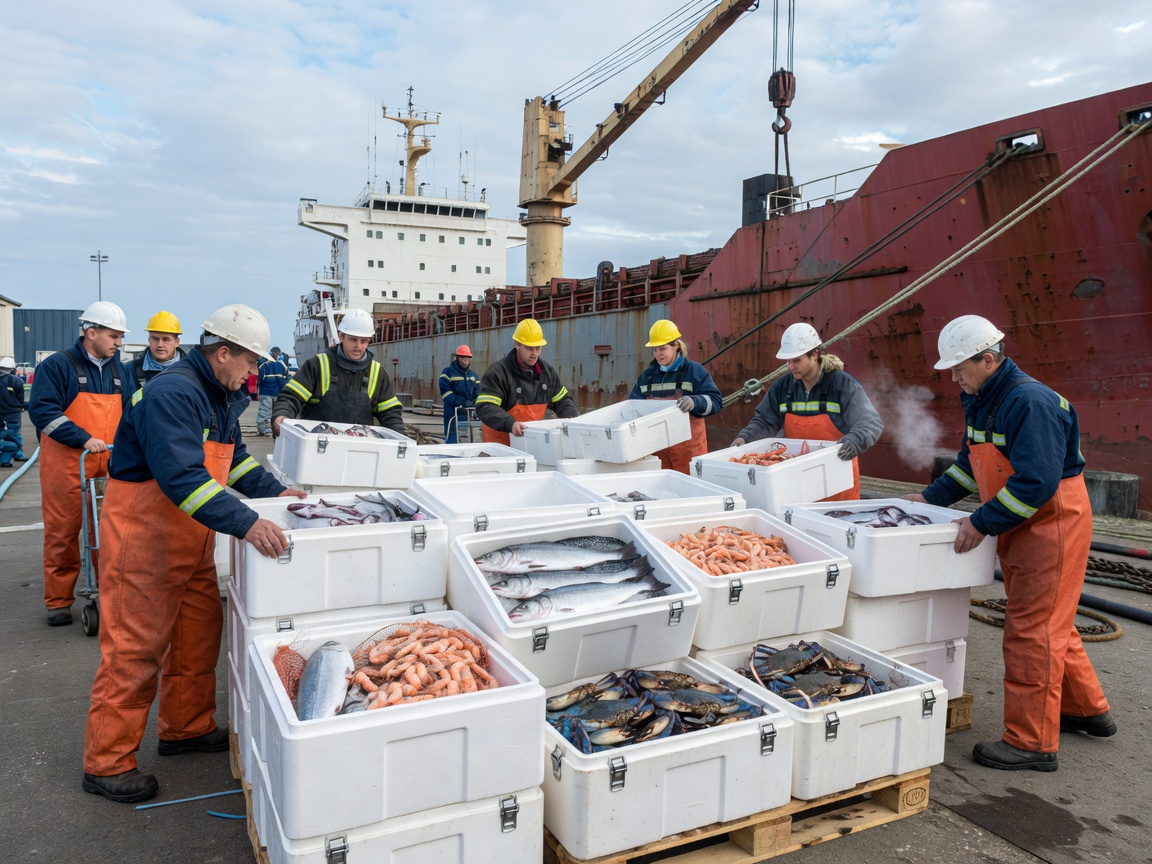
- Transfer Points: Ports, cross-docking facilities, and distribution hubs involve changing possession, demanding strict handover protocols to ensure no pallet is left waiting on a warm tarmac.
Packaging Considerations
Effective logistics rely heavily on the thermal properties of the packaging itself. Standard cardboard offers minimal insulation. Instead, operators rely on expanded polystyrene (EPS) boxes, specialized corrugated plastics, and insulated liners. The packaging serves as a micro-environment, providing a buffer against brief ambient exposure during those critical transfer phases. Proper sealing and appropriate ratios of refrigerant (like flake ice or gel packs) to product weight are essential variables in delivery planning.
Maintaining Temperature Continuity
Breaks in the cold chain can create immense operational headaches. An unexpected delay at a border crossing or a mechanical failure in a refrigeration unit requires immediate contingency planning. Logistics providers must assess the thermal inertia of the shipment—how long the packaging can maintain internal temperatures without external mechanical cooling—and make rapid decisions about rerouting to temporary cold storage facilities.
Cold-Chain Checklist
- Identify if the shipment requires chilled or deep-frozen conditions.
- Confirm the thermal properties and insulation rating of the chosen packaging.
- Map out all transfer points and estimate exposure times during handovers.
- Verify that receiving facilities have immediate cold storage capacity.
- Establish a clear communication protocol for unexpected transit delays.